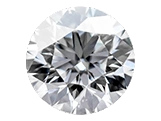
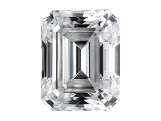
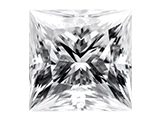
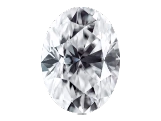
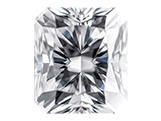
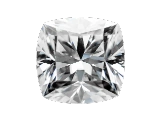
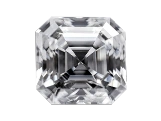

Clarity is a cornerstone of diamond quality, and for a lab grown diamond, the path to a flawless appearance is determined by its creation process. With five years in the industry, I’ll break down the two dominant methods—CVD and HTHP—and their direct impact on a diamond’s internal purity. By examining high-clarity examples like this 0.38 carat E-VVS2 cushion cut lab grown diamond, we’ll uncover why one process can consistently achieve VVS grades while the other faces more challenges.
Table of Contents
The Core Science How CVD and HTHP Lab Diamonds Grow
Both methods replicate natural diamond formation, but under vastly different conditions that shape their clarity potential.
1. The CVD Lab Grown Diamond Process
CVD (Chemical Vapor Deposition) grows a diamond in a low-pressure, high-temperature (800–1000°C) chamber. A carbon-rich gas, like methane, is broken down, and carbon atoms are deposited, layer by atom, onto a diamond seed plate.
- Growth Pace: Slower (2-4 weeks per carat), allowing for controlled, orderly crystal expansion.
- Clarity Profile: Tends to produce microscopic, gaseous inclusions (like nitrogen) and fine-grained growth striations. These features are typically sub-micron in size, making them excellent candidates for high VVS clarity lab diamonds.
2. The HTHP Lab Grown Diamond Process
HTHP (High Pressure High Temperature) mimics the extreme geological forces deep within the Earth. A carbon source and a metal catalyst (e.g., iron, nickel) are subjected to immense pressure (5-6 GPa) and heat (1300–1500°C) to form a diamond crystal.
- Growth Pace: Faster (1-2 weeks per carat), but in a more volatile environment.
- Clarity Profile: Can introduce metallic catalyst inclusions (tiny trapped metal flakes), internal fractures, or mineral crystals. These inclusions can be larger and more visually prominent, making consistent VVS clarity more challenging to achieve.
In essence, the controlled, “gentle” environment of CVD diamond growth is inherently favorable for high clarity. The more intense HTHP process requires exceptional precision to match that clarity standard.
How the Process Directly Shapes Diamond Clarity Three Key Factors
1. Inclusion Quantity and Size
- CVD Process: The precise gas environment minimizes impurity introduction. Inclusions are fewer and smaller, often landing in the VVS range.
- HTHP Process: The molten metal catalyst can introduce more numerous inclusions. While excellent HTHP stones exist, achieving the same consistency at the highest clarity grades is statistically less common.
2. Inclusion Visibility and Placement
- CVD Process: Inclusions like pinpoints or faint growth lines often align with the crystal structure and can be strategically hidden by a skilled cutter during the fashioning of the lab diamond.
- HTHP Process: Metallic inclusions have a different color and reflectivity than the diamond, making them more noticeable under magnification, even at small sizes.
3. Scaling to Larger Carat Weights with High Clarity
- CVD Process: Its stability allows it to scale more predictably. Growing a 2-carat diamond with VVS clarity is a more consistent outcome with CVD technology.
- HTHP Process: As crystal size increases, controlling inclusion formation becomes more complex. Producing larger, high-clarity HTHP diamonds is a significant technical achievement.
This scalability explains why many premium lab grown diamonds over 0.3 carats in the VVS range, like our 0.38ct example, are created using CVD. It offers a reliable path to both size and purity.
The Proof in the Stone Testing a High-Clarity CVD Lab Diamond
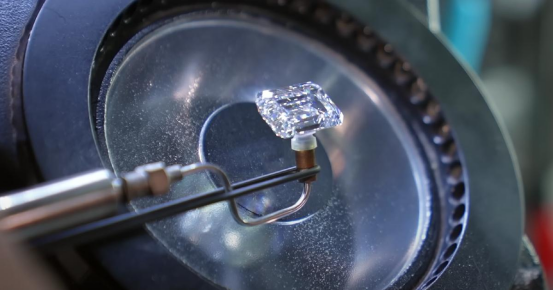
Let’s examine how these principles manifest in a real high-clarity product.
1. Under the Microscope
When viewing the 0.38 carat cushion cut diamond under 10x magnification, its VVS2 grade is evident. A single, pinpoint inclusion is found near the girdle—so small it requires careful searching. There are no visible metallic spots or clouds. The crystal structure is clean and orderly, a hallmark of controlled CVD growth.
2. The Naked-Eye Result
In daily wear, this is the only test that matters. This lab created diamond, with its E color and VVS2 clarity, appears perfectly flawless to the unaided eye on any background. Its visual purity is identical to a mined diamond of the same grade, delivering the brilliance and transparency consumers expect.
3. The Value Proposition
CVD’s clarity advantage doesn’t command a steep premium. This high-clarity 0.38ct diamond is priced at $210. A comparable mined diamond costs over $800, and even an HTHP stone of similar clarity might be priced higher due to the relative difficulty of achieving it. This makes CVD lab diamonds a powerful choice for value-focused clarity seekers.
Your Guide to Choosing Based on Clarity and Process
For Buyers Prioritizing High Clarity (VVS+):
- Recommended Process: CVD lab grown diamonds.
- Best For: Solitaire settings, classic jewelry where the stone is the star, and buyers who value the assurance of top-tier clarity.
- Product Example: The 0.38 carat E-VVS2 cushion cut is a perfect benchmark.
For Buyers Focused on Maximum Value (VS-SI Range):
- Recommended Process: HTHP lab grown diamonds can offer excellent value.
- Best For: Halo settings, fashion jewelry, or entry-level pieces where the budget is paramount and the stone will still be eye-clean.
- Key Tip: Always insist on an IGI or GIA certificate to verify the clarity grade, regardless of the process.
The Final Verdict Process Informs Potential, Choice Informs Value
The CVD process, with its controlled growth environment, is engineered for high clarity and is the preferred method for consistently achieving VVS grades. The HTHP process is a remarkable technology that can produce beautiful stones, often at compelling price points in the VS range.
The 0.38 carat cushion cut lab grown diamond exemplifies the CVD advantage: it delivers certified high clarity and brilliant visual performance at an accessible price. Your choice shouldn’t be about chasing a specific process, but about matching the technology’s strengths to your priorities—whether that’s guaranteed purity or optimal budget efficiency.