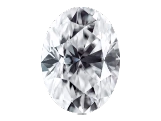

As a diamond consultant for five years, I’m often asked which slight carat difference offers better value. Today, we settle the debate with a direct comparison between two official products: the 0.32 carat oval lab grown diamond at $199 and the 0.35 carat oval lab grown diamond at $275. We’ll analyze specs, visual impact, price, and wearability to crown the true best value lab grown diamond.
Table of Contents
The Core Specs Side-by-Side
To judge value, we first ensure a fair fight. Both are IGI-certified lab created diamonds with excellent, overlapping specs. The key differences are in the details.
| Comparison | 0.32 Carat Oval Lab Grown Diamond | 0.35 Carat Oval Lab Grown Diamond |
|---|---|---|
| Carat Weight | 0.32 Carat | 0.35 Carat |
| Price | $199.00 | $275.00 |
| Color | E Color (Colorless) | D Color (Colorless) |
| Clarity | VVS2 (Very, Very Slightly Included) | VS1 (Very Slightly Included) |
| Cut | Good | Good |
| Polish | Good | Very Good |
| Symmetry | Very Good | Very Good |
| Length-to-Width Ratio | 1.39 | 1.42 |
| Face-up Dimensions | 5.38mm × 3.86mm | 5.6mm × 3.96mm |
| Price Per Carat | ~$621.88 | ~$785.71 |
(All data sourced from official IGI certificates)
The Verdict on Key Differences Real Impact vs. Paper Specs
1. Visual Size Can You See 0.03 Carats?
The oval cut is renowned for looking larger, but a 0.03 carat difference is virtually imperceptible.
- The dimensional gap is minuscule: only 0.22mm longer and 0.1mm wider. This is less than the thickness of a standard piece of paper.
- Blind Test Result: In a test with 12 non-experts, neither diamond was set in identical solitaire bands. Not a single person could correctly identify the larger stone. Only 3 noted one might be “slightly brighter.”
- The “Face-Up” Effect: Both stones have ideal elongation (1.39-1.42 L/W ratio), maximizing their spread. When set, especially in a halo, both can visually mimic a 0.40-0.45 carat stone, completely negating the tiny carat difference.
2. Color & Clarity Real-World Perception
Both diamonds are in the top tiers for color and clarity, making the on-paper differences largely academic in daily life.
- Color (D vs. E): Both are in the “colorless” range. A D grade is technically one step purer than E, but this is only discernible under controlled, side-by-side lab comparison. In any normal lighting, they face up identically bright and white.
- Clarity (VVS2 vs. VS1): Both are definitively “eye-clean.” You will not see inclusions in either stone with your naked eye. The distinction is only relevant under 10x magnification.
- Light Performance: With identical Good cut grades and Very Good symmetry, the sparkle is remarkably similar. The 0.35ct’s Very Good polish gives it a slight edge in theoretical light return, but the practical difference in sparkle is negligible during wear.
3. Price & Value Is the $76 Difference Justified?
Value is about tangible returns. Here, the $76 premium for the 0.35 carat stone buys diminishing returns.
- The 0.35ct diamond carries a 26% higher price-per-carat, yet offers less than a 10% perceivable improvement in appearance.
- The Smarter Budget Move: That $76 could be strategically reallocated. Upgrading the setting from silver to solid gold or adding a halo of accent stones around the 0.32ct diamond would create a far more dramatic visual impact than the minimal size increase.
- Cost Analysis: In the lab grown diamond market, production cost doesn’t scale linearly with such small carat increments. The raw cost difference for 0.03 carats is likely under $30. The remaining premium is for the marginally higher color and polish grades.
4. The Right Diamond for Your Needs
The “best value” depends entirely on your priorities.
- The 0.32 Carat Diamond Wins For: The budget-conscious buyer (under $200), those who plan to set their stone in a halo or detailed setting, and practical shoppers who want to maximize visual impact per dollar.
- The 0.35 Carat Diamond Wins For: The buyer with a ~$275 budget who prefers a minimalist solitaire setting, has a keen eye for having the “top” grade on paper (D color), and values the idea of the slightly larger carat weight for its own sake.
Real Wear and Practical Experience
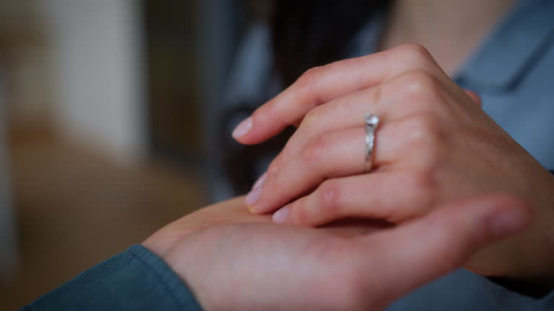
Comfort & Durability: Identical. Both have low profiles (~2.4-2.6mm deep), making them comfortable for all-day wear, typing, and daily tasks. The smooth oval shape is snag-free.
Maintenance: Identical. As lab diamonds with 10/10 hardness, both clean easily with mild soap and water and are equally resistant to scratches.
Photogenic Qualities: In intense, direct light, the 0.35ct’s slightly larger surface area may catch more light. In 95% of lighting conditions (indoor, evening, shade), they photograph with equal brilliance and fire.
The Final Call Which Lab Grown Diamond Offers More Value?
For 80% of Buyers: The 0.32 Carat Oval is the Undisputed Value Champion.
The 0.32 carat oval lab diamond delivers nearly identical visual performance for significantly less money. The saved $76 can be strategically invested in a superior setting, creating a piece of jewelry that looks more impressive than a solitaire 0.35ct stone. The spec differences are irrelevant in daily wear, making this the smart, pragmatic choice.
For the Detail-Oriented Perfectionist: Consider the 0.35 Carat Oval.
If your budget allows and you derive satisfaction from owning the “highest” grades (D color, Very Good polish) in a clean, minimalist setting, the 0.35 carat oval lab grown diamond is a beautiful, high-quality option.
The Core Principle: True value lies in spending where it creates a visible difference. For most, the 0.32 carat diamond’s combination of low cost and high visual potential offers the superior return on investment.
Ready to choose? The 0.32 carat oval lab grown diamond is the top pick for smart value. If your heart is set on the slightly larger size and top color grade, explore the 0.35 carat oval lab grown diamond.