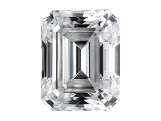
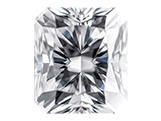
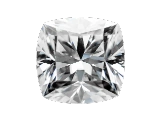
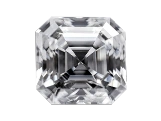

The emerald cut lab grown diamond with its clean rectangular lines and stepped facets is the epitome of understated elegance. Yet when choosing one, many overlook the most crucial factor—the table percentage. This single specification dictates how large the diamond looks, how its light performs, and its overall style. As a professional with five years in the lab grown diamond industry, I’ll use this 0.34 carat emerald cut lab grown diamond as a prime example to explain this essential metric and help you choose the perfect stone.
Table of Contents
What Table Percentage Means for an Emerald Cut Lab Grown Diamond
In an emerald cut lab grown diamond, the table percentage is the ratio of the top facet’s width to the diamond’s overall width, expressed as a percentage. Unlike a round brilliant, this figure is the master key to its appearance. It directly controls how large the diamond appears face-up, the style of its sparkle (from hall-of-mirrors flashes to a deep glow), and the intensity of its classic Art Deco character.
Our sample stone, the 0.34 carat emerald cut lab diamond, has a table percentage of 70% and a length-to-width ratio of 1.46. This combination creates what many consider the “golden ratio” for this shape, balancing modern presence with vintage soul.
Why 70% Table is the Golden Ratio for a 0.34 Carat Emerald Cut Lab Grown Diamond
For a modestly sized stone like 0.34 carats, a 70% table percentage is a strategic sweet spot that delivers in three key areas for a lab grown emerald cut diamond.
1. Maximized Visual Size
The rectangular shape already appears larger than a round diamond of the same weight. A 70% table amplifies this effect. At 3.18×4.63mm, the diamond’s face-up width is optimized, making it look approximately 15% larger than an emerald cut of the same carat weight with a 65% table. In a side-by-side test, the difference is clear—the 70% table stone simply looks more substantial and impressive.
2. Balanced Light Performance
A common misconception is that a larger table kills sparkle. For an emerald cut lab diamond, 70% creates perfect harmony. It allows ample light to enter, where it is reflected by the 42.6° pavilion angles in the signature “flash” pattern of parallel light and dark bands. The result is a sparkle that is deep and luminous, not scattered (as with a 75%+ table) or too subdued (as with a sub-65% table). Combined with a D color and VS2 clarity, the diamond shows a crisp, icy-white brilliance in daylight and a soft, elegant glow under lamps.
3. Versatile Timeless Style
This proportion perfectly captures the Art Deco essence. The strong geometric lines and clear facets deliver an unmistakable vintage sophistication, ideal for a classic solitaire setting. Yet, at 70%, it avoids looking bulky or antique. It remains sleek and modern enough for daily wear, seamlessly pairing with everything from office wear to evening dresses.
The 3 Rules for Choosing Your Emerald Cut Lab Grown Diamond Table Percentage
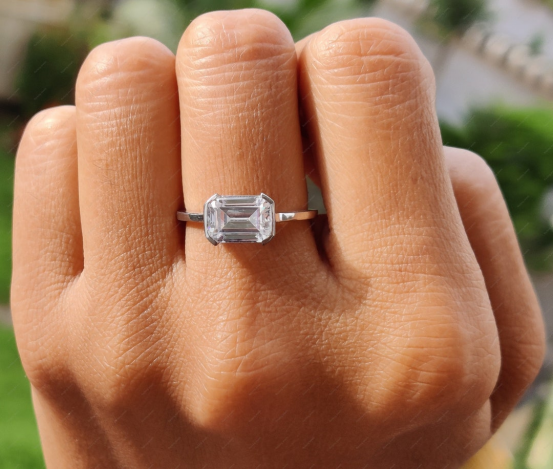
Use these principles derived from our example stone to make your lab grown diamond choice.
1. Match Table to Carat Weight
- Under 1 Carat: Prioritize a larger table (68%-72%) to maximize visual size, as with our 0.34 carat example.
- Over 1 Carat: You have more flexibility. A 66%-70% range maintains elegance without over-emphasizing size.
2. Pair Table with Length-to-Width Ratio
The table must work with the stone’s proportions.
- Square Ratios (1.3-1.4): Best with a 65%-68% table to avoid a cramped look.
- Elongated Ratios (1.4-1.6): Pairs beautifully with a 68%-72% table, as seen in our 1.46 L/W, 70% table stone, creating a graceful, slender silhouette.
3. Compensate with Clarity and Color
The open facets of an emerald cut lab diamond are revealing.
- Higher Clarity (VS2+): You can confidently choose a larger table (70%+) to showcase the diamond’s purity.
- Lower Clarity (SI1 or below): Opt for a smaller table (65%-68%) to help mask inclusions.
- Higher Color (D-F): A larger table enhances the icy, colorless effect.
- Lower Color (G+): A slightly smaller table can minimize color visibility.
Why This 0.34 Carat Lab Grown Emerald Cut Diamond is a Benchmark Example
Beyond its ideal 70% table, this lab grown emerald cut diamond is a masterclass in balanced specifications.
- VS2 Clarity: Remains eye-clean despite the open facets, a critical achievement.
- Good Cut with Very Good Polish/Symmetry: Ensures crisp facets and excellent light return.
- Exceptional Value: At $199 with an IGI report, it offers specifications that would cost over $600 in a mined diamond, highlighting the core advantage of choosing a lab created diamond.
Your Emerald Cut Lab Grown Diamond Selection Checklist
- For Maximum Size & Daily Wear (0.3-0.5 carats): Target a 68%-72% table, a 1.4-1.5 L/W ratio, and VS2/F color or better. Our example diamond fits this perfectly.
- For Bold Vintage Character (0.5+ carats): Choose a 65%-68% table with a 1.3-1.4 L/W ratio and top-tier D/VVS clarity for a true Art Deco statement.
- For Best Value & Low Profile (0.2-0.3 carats): A 70%-72% table can make the stone appear larger, allowing you to select a G/H color and SI1 clarity to stay within budget while maintaining a beautiful look.
The Final Word Table Percentage is Your Secret Weapon
Choosing an emerald cut lab diamond is about more than just the shape. The table percentage is the critical, often-hidden lever that controls its ultimate beauty and wearability. For a smaller stone, the right proportion—like the 70% table on this 0.34 carat diamond—unlocks a presence and sparkle that belies its carat weight.
The 0.34 carat emerald cut lab grown diamond proves that with the correct proportions, you don’t need to chase a larger carat to get a dramatic and elegant result. It is a masterfully crafted example that makes selecting your perfect stone an informed and confident process.